


























Saguaro National Park is divided into two different sections to the east and west of Tucson. Take a minute to read through the orientation page in order to get a visual idea of the locations of the parks and the pertinent details of each different area.
Overview
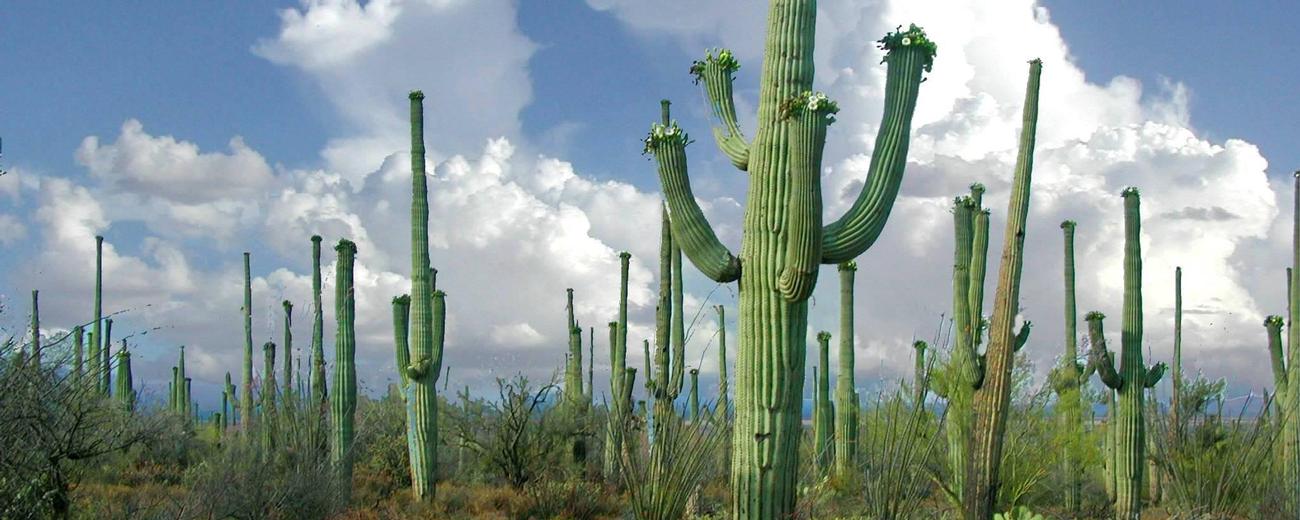
This unique desert is home to the most recognizable cactus in the world, the majestic saguaro. Visitors of all ages are fascinated and enchanted by these desert giants, especially their many interesting and complex interrelationships with other desert life. Saguaro cacti provide their sweet fruits to hungry desert animals. They also provide homes to a variety of birds, such as the Harris' hawk, Gila woodpecker and the tiny elf owl. Yet, the saguaro requires other desert plants for its very survival. During the first few years of a very long life, a young saguaro needs the shade and protection of a nurse plant such as the palo verde tree. With an average life span of 150 years, a mature saguaro may grow to a height of 50 feet and weigh over 10 tons. Many other kinds of cactus, including barrel cactus , cholla cactus, and prickly pear , are also abundant in the park. Three endangered species of animals live in the park: the Mexican Spotted Owl , Peregrine Falcon , and Lesser Long-nosed Bat.
While most visitors to Saguaro National Park choose a leisurely drive on one of the scenic loop drives, those eager for an escape from the rigors of city life often opt to explore the park on one of the many trails. With over 150 miles of hiking trails, ranging from flat and easy strolls in the Sonoran Desert to steep and rugged hikes into the Rincon Mountains, visitors of every ability have a place to get out of the car and explore. Note: Hiking is not advisable during the hot summer months.
Park Layout
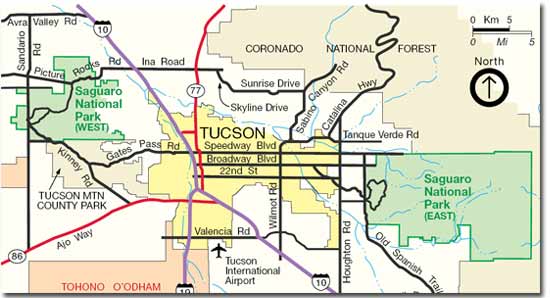
Saguaro National Park is divided into two sections, or districts, lying approximately 20 miles east and 15 miles west of the centre of the city of Tucson, Arizona . There is a visitor center in each district. Both are easily reached by car from Tucson, but there is no public transport into either section. Both sections conserve fine tracts of the Sonoran Desert , including ranges of significant hills, the Tucson Mountains in the west and the Rincon Mountains in the east.
East District
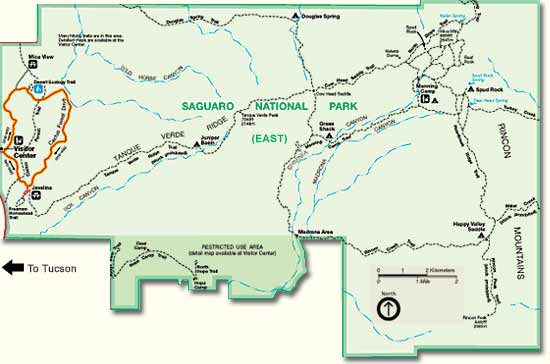
The eastern section, 20 miles east of Tucson, is surrounded by mountains to the north, and the Rincons and Tanque Verde Ridge to the east. The park provides excellent examples of the desert scrub community of the Sonora Desert environment. There are many opportunities for sightnseeing in the Eastern District of the park, including the eight-mile Cactus Forest Drive and the Tanque Verde Ridge Trail. The Tanque Verde Ridge Trail provides access to the backcountry areas of Saguaro East. It is a strenuous, multi-day trek that passes by the 7,049 foot Tanque Verde peak. Inquire at the visitor center for more information.
West District
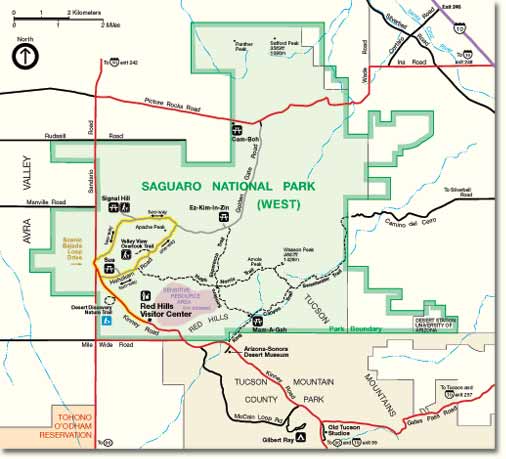
Saguaro's other section, known as the Tucson Mountain or Western Distric, contains 104 square miles of mountain and desert and is located 15 miles to the west of Tucson. This is a drier and lower section than the Eastern District. One of the major distinguishing features of the western section is the thicker stands of saguaro cactus. These saguaro stands are the densest in the world. This section was not subject to the pressures of grazing and other factors which caused a decline in the saguaro population in the eastern district.
Some Other Things To Know
Pets
For the protection of your animal, other visitors and Saguaro National Park, pets are allowed only on roadways and in picnic areas. (Pets are excluded from Mam-A-Gah picnic area in the west district as it is only accessible by trail.)
Pets map not be taken on any trail, off roadways, or inside either visitor center at any time.
Where allowed, pets must be kept on a leash at all times while in Saguaro National Park. Leash length may not exceed 6 feet. Owners must remain in control of their pets at all times, never tying them off and leaving them. Owners should be aware of the reactions of other visitors to their pets...not everyone is a dog fan.